Disciplined Agile: A Complete Guide to Principles, Benefits, Implementation
In today’s fast-changing business and technology environment, organizations are constantly seeking ways to deliver value faster, stay competitive, and meet customer expectations effectively. Disciplined Agile (DA) has emerged as a powerful approach that enables teams and enterprises to optimize their ways of working, combining flexibility with proven practices.
This blog provides a complete guide to Disciplined Agile, covering its principles, benefits, and implementation strategies, helping you understand why it is gaining global recognition as a transformative framework for modern enterprises.
What is Disciplined Agile?
Disciplined Agile (DA) is a process decision framework that helps organizations choose the right way of working (WoW) for their unique context. Unlike rigid methodologies, DA promotes flexibility, allowing teams to blend practices from Agile, Lean, Scrum, Kanban, SAFe, and even traditional project management approaches.
Originally developed by Scott Ambler and Mark Lines, DA was later acquired by the Project Management Institute (PMI), making it an integral part of PMI’s global offerings. It is not a single framework but rather a toolkit that empowers professionals to select the best practices tailored to their team, project, and organizational needs.
Key Principles of Disciplined Agile
- Choice is Good: Instead of following one-size-fits-all frameworks, DA encourages organizations to explore multiple practices and choose what works best.
- Context Counts: Every project and organization is unique. DA promotes tailoring approaches to suit context, industry, team size, and business goals.
- Be Pragmatic, Not Ideological: DA focuses on what works in reality rather than blindly following trends or rigid methods.
- Enterprise Awareness: DA looks beyond individual teams, ensuring that solutions align with organizational strategy, culture, and long-term objectives.
- Optimize Flow, Not Efficiency: Rather than maximizing individual productivity, DA emphasizes optimizing value delivery across the entire system.
- Delight Customers: The ultimate goal of DA is to provide consistent value and high-quality outcomes that exceed customer expectations.
Benefits of Disciplined Agile
- Flexibility and Adaptability: DA is not limited to a single method. Teams can combine practices from Scrum, Kanban, Lean, and more — making it versatile across industries and domains.
- Improved Decision-Making: By offering a toolkit of practices, DA empowers professionals to make informed choices that best fit their project’s needs.
- Enterprise-Wide Agility: Unlike team-level frameworks, DA extends agility across the entire organization, integrating strategy, governance, architecture, and delivery.
- Faster Time-to-Market: By focusing on value streams and optimizing flow, organizations can deliver solutions faster without compromising quality.
- Customer Satisfaction: With its principle of delighting customers, DA ensures solutions are customer-centric, leading to long-term loyalty and business success.
- Alignment with PMI Certifications: As DA is part of the PMI ecosystem, professionals can pursue certifications such as DASM and DASSM to boost their careers.
Implementing Disciplined Agile
- Assess Current Practices: Evaluate your existing project management and delivery methods to identify strengths, weaknesses, and gaps.
- Educate Teams and Leaders: Train professionals on DA concepts and frameworks. Certifications like DASM and DASSM are excellent ways to build foundational knowledge.
- Adopt a Tailored Way of Working (WoW): Start small by blending practices that suit your context. For example, a team may use Scrum for planning and Kanban for workflow management.
- Expand Across the Enterprise: Scale DA principles beyond IT and software development into other functions such as operations, marketing, HR, and finance.
- Continuous Improvement: Monitor outcomes, gather feedback, and refine practices. The goal is not just to implement DA but to evolve ways of working over time.
Disciplined Agile vs Traditional Agile Frameworks
While Scrum, SAFe, and Kanban are widely used, they often impose specific rules and structures. In contrast, Disciplined Agile provides a toolkit approach, enabling organizations to mix and match practices.
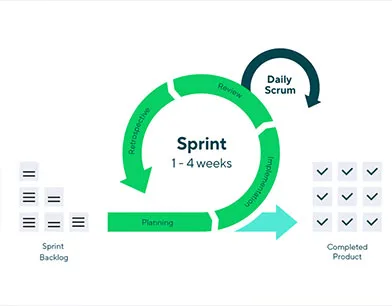
- Scrum: Focuses on sprints and roles, while DA allows you to integrate Scrum with Kanban or Lean.
- SAFe: Scales Agile across enterprises, but DA provides more flexibility and context-driven decision-making.
Thus, DA is often referred to as “Agile done pragmatically.”
Who Should Use Disciplined Agile?
- Organizations looking to scale agility across multiple departments.
- Project managers and Scrum masters who want to expand their toolkit.
- Enterprises facing complex challenges that require flexibility.
- Professionals aiming to enhance their careers with PMI certifications.
Conclusion
In an era where speed, adaptability, and customer satisfaction define business success, Disciplined Agile (DA) stands out as a flexible, context-driven framework. By embracing its principles, organizations can achieve enterprise-wide agility, accelerate value delivery, and create customer delight.
Whether you are a professional seeking career growth or an organization striving for transformation, Disciplined Agile offers a proven path to success. Start exploring DA today and empower your teams to choose their Way of Working (WoW) with confidence.